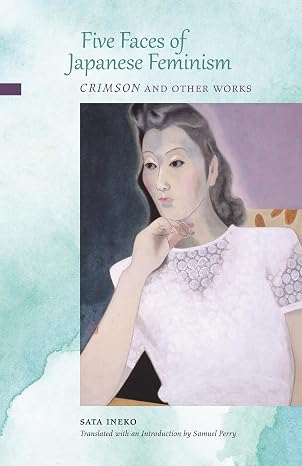
Five Faces of Japanese Feminism: Crimson and Other Works
| Müəllif | Ineko Sata |
|---|---|
| Nəşr olunduğu il | 2018 |
| Elm sahəsi | Tarix |
| Nəşriyyat | University of Hawaii Press |
| Nəşr yeri | New York |
Ineko Sata. Five Faces of Japanese Feminism: Crimson and Other Works. New York, University of Hawaii Press, 2018.
This exquisite collection of short fiction by Sata Ineko (1904–1998) offers readers a fascinating glimpse into the lives of women rarely dignified in fiction: glamorous café waitresses, feisty communist activists, a tortured novelist, a soldier’s wife, and single women in Japan’s Korean colony. Her delicately penned portraits challenge the tired, erotic tropes of the geisha and schoolgirl, while delving into the dilemmas women themselves faced in their personal and professional relationships.
The stories and novella translated here span a period of two decades and the most important events and themes in twentieth-century history. “Café Kyoto” (1929) takes up the glamorous, if tragic, lives of café waitresses in the wake of the late 1920s Depression. “Tears of a Factory Girl in the Union Leadership” (1931) offers a unique portrait of a woman who works with the underground Communist Party. “The Scent of Incense” (1942), written as a work of “home front” literature, was meant to help mobilize women as productive workers and supportive housewives during World War II. “White and Purple” (1950), one of Sata’s rare postcolonial works penned just after the outbreak of the Korean War, reflects on the psychological damage inflicted on women during Japan’s occupation of Korea. Sata’s first novella, Crimson (1936–1938), joins a long tradition of women’s writing in Japan that sought to assert women’s “liberation” from what was seen as the oppressively patriarchal institution of marriage.